Whether you are a landlord, a tenant, a tradesperson, a host or a small business, sooner or later someone will say something about you that you believe is unfair. How you respond often matters more to future customers, landlords or employers than the complaint itself.
Step 1: Pause before replying
An angry reply written in the first hour rarely helps. Read the complaint, write down how you feel, and come back to it once you can respond factually.
Step 2: Separate what is true from what is not
Most unfair complaints contain something real — a delay, a misunderstanding, a missed message — wrapped in exaggeration. Identify:
- What actually happened, according to your records
- What is accurate in the complaint
- What is inaccurate or missing context
Step 3: Gather your evidence
Collect messages, invoices, photos, booking records and anything else that shows what happened. Our guide to documenting a dispute explains what carries weight.
Step 4: Reply publicly — briefly and professionally
- Thank the person for the feedback or acknowledge their experience.
- Acknowledge anything that went wrong.
- Correct factual errors calmly, without sharing private information.
- Offer to resolve it directly.
Remember that your real audience is everyone who reads the exchange later. A measured reply often earns more trust than a spotless record.
Step 5: Try to resolve it privately
Contact the person directly where appropriate. Many complaints soften once someone feels heard, and some are resolved with a small gesture or a simple explanation.
Step 6: Use formal routes when needed
- If a review breaks a platform's rules — for example it is fake, abusive or about the wrong person — report it through the platform's process.
- If content is defamatory or harassing, consider legal advice.
- Avoid posting fake positive reviews to bury a negative one; in many countries this breaches consumer protection rules.
What not to do
- Do not reveal the complainant's personal details
- Do not threaten or insult them
- Do not argue point by point in a long public thread
- Do not ignore a pattern of similar complaints
Why a right of reply matters
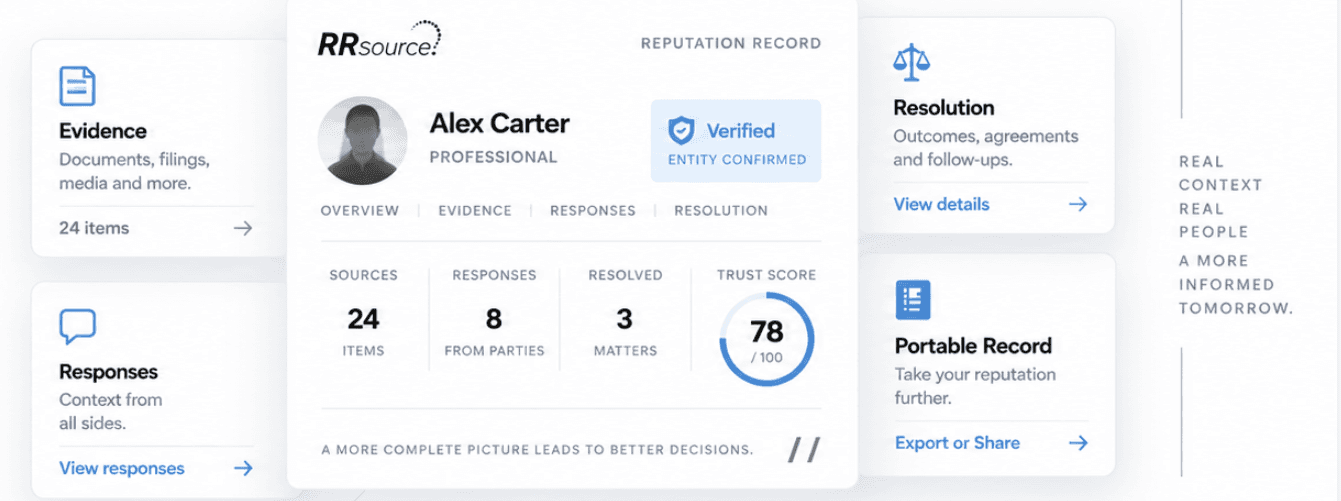
Many review systems give the person named little or no meaningful way to respond, and no way to record how a complaint was resolved. RRSource was designed differently. A report is a first-hand account, not a fact; the person named can respond with their own evidence; and a report cannot affect an RR Score merely because it was submitted — only a completed Resolution can make it eligible. An unfair claim stays visibly unproven, and a resolved one shows you did the right thing. Learn how Reputation Records work.
Defamation, consumer protection and platform rules differ by country and service.