Whether you are hiring an employee, a nanny or a contractor, you may want to know whether someone's stated work history is true. The short answer: you can usually verify the basic facts of employment, generally with the person's consent, but verifying the quality of their work is much harder.
What you can usually verify
- That the employer exists — through company registers or public records
- Dates of employment — from the employer's HR department
- Job title — from the same source
- Professional licences and registrations — often through public registers held by regulators
- Qualifications — from the awarding institution, usually with consent
What is harder to verify
- Performance and conduct
- Reasons for leaving
- Responsibilities beyond the job title
- Informal, cash-in-hand or freelance work
Many organisations have policies limiting references to dates and job titles, largely because of legal risk. So "verified" often means only "they worked there".
Consent and the law
In many countries, data protection and employment law require that the person knows their history is being checked, and sometimes that they give explicit consent. Some formal background checks can only be requested with consent or for certain roles. As a rule of thumb:
- Tell the candidate what you will check and why.
- Get written consent before contacting previous employers or using a screening provider.
- Only collect what is relevant to the decision.
- Store the information securely and delete it when no longer needed.
How to check work history step by step
- Ask for a complete history, including gaps, with employer names and dates.
- Find contact details independently — do not rely only on phone numbers the candidate provides.
- Contact the employer's HR department to confirm dates and title.
- Speak to former managers where possible, with consent, and ask specific questions.
- Check public registers for licences and professional memberships.
- Ask about gaps directly and without judgement — there are many legitimate reasons.
Checking freelance and informal work
- Ask for invoices, contracts or client testimonials that can be verified
- Contact past clients directly
- Look at portfolios and ask about specific projects
- For household roles, ask families for a conversation, not just a written note
Red flags
- Employers that cannot be found in any public record
- Referees who answer the phone as a personal mobile when a company number would be expected
- Dates that shift between the CV and interview
- Reluctance to consent to any verification
From "where they worked" to "how they worked"
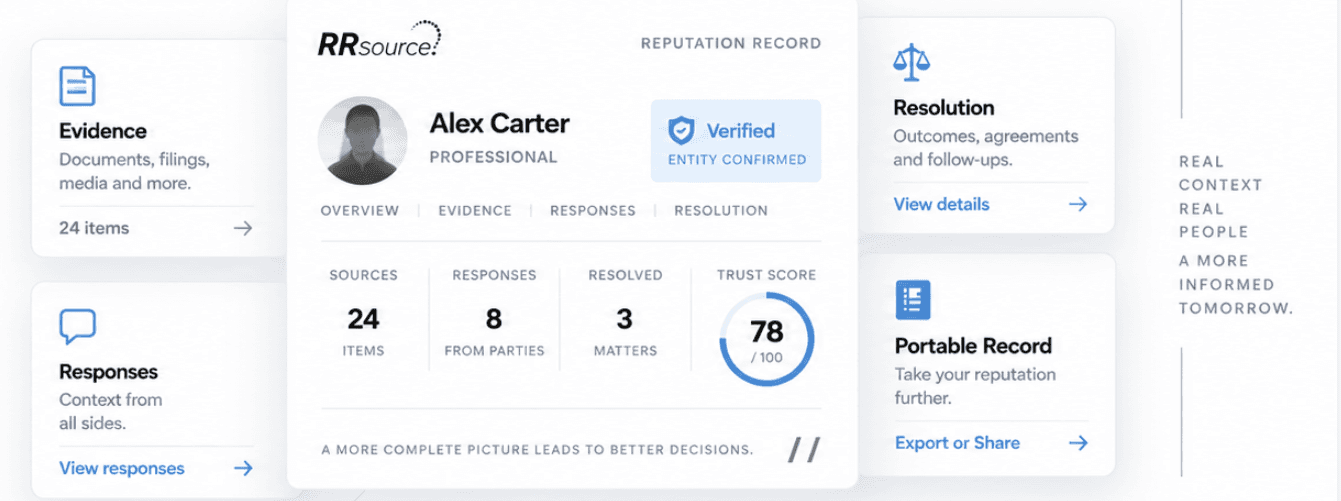
Verification confirms facts; it rarely shows conduct. A Reputation Record adds structured, evidence-based accounts of how someone behaved, with their own responses, connected to a verified identity and shared only with their permission. See also CV vs Reputation Record and background checks vs references.
Consent requirements and permitted checks vary by country. This is general information, not legal advice.