AI · REPUTATION · IDENTITY · TRUST
Can AI Create a Real Human Reputation?
AI can write your biography, polish your CV, generate a convincing
photograph, answer messages in your voice and even construct a synthetic
identity. But reputation is supposed to come from something much harder
to fabricate: what other people can verify about how you actually behaved
over time. As artificial intelligence becomes capable of producing the
appearance of credibility, the difference between a manufactured persona
and an earned reputation is becoming critical.
Open an AI tool and ask it to make somebody look trustworthy.
It can do a remarkable job.
It can write the biography.
Improve the CV.
Create the profile photograph.
Rewrite awkward employment history.
Produce articulate answers to difficult questions.
Generate testimonials.
Build a professional website.
Imitate a voice.
And increasingly, it can help create an entire digital person who appears
coherent enough to pass through ordinary online interactions.
So here is a question we may need to ask much more seriously:
If AI can manufacture almost every signal we associate with credibility,
can it manufacture reputation too?
The answer depends on what we mean by reputation.
AI Can Manufacture the Appearance of Reputation
Consider the ingredients of a conventional online reputation.
A professional photograph.
A confident biography.
An impressive CV.
Social-media activity.
Positive comments.
Recommendations.
Articles.
Testimonials.
A polished personal website.
AI can help create almost all of them.
And that creates an uncomfortable problem.
We have spent years using presentation as a shortcut for credibility.
Now presentation is becoming extraordinarily cheap.
The Perfect CV Is No Longer Expensive
Once, writing an exceptionally polished CV required skill, experience,
professional help or considerable time.
Today, somebody can feed a rough career history into an AI system and
receive a confident, professionally written document in seconds.
That is not inherently dishonest.
AI can help people communicate genuine experience more clearly.
But the same technology can also make weak experience look sophisticated.
It can turn uncertainty into certainty.
It can remove awkwardness.
It can turn ordinary responsibilities into impressive-sounding
achievements.
And, if deliberately misused, it can help fabricate things that never
happened at all.
That means the quality of the writing tells us progressively less about
the quality of the underlying person.
The Same Problem Applies to Photographs
A professional-looking portrait once required an actual person standing
in front of an actual camera.
That assumption no longer holds.
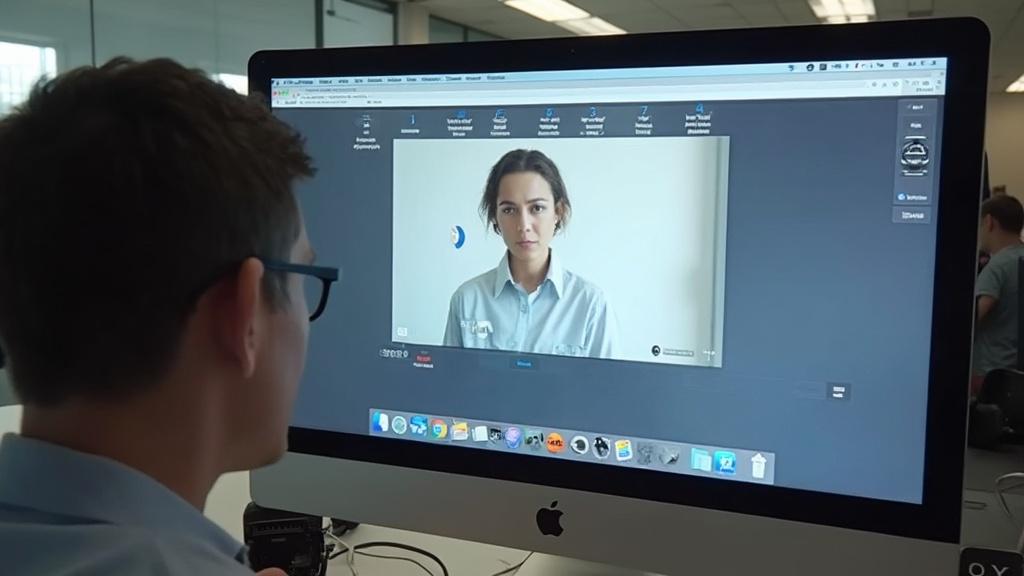
AI can generate convincing human faces that belong to nobody.
It can improve real photographs.
It can change clothing, background, apparent age, expression and setting.
It can create the visual signals of professionalism without the
professional history behind them.
The face looks credible.
But credibility is not what the pixels prove.
Then Came the Synthetic Person
The problem becomes considerably more serious when individual AI
capabilities are combined.
A synthetic persona can have:
- A generated face
- A fabricated name
- A professional biography
- A believable employment story
- Social-media profiles
- AI-generated photographs
- A cloned or generated voice
- Automated conversations
- Fabricated documents
Individually, each signal may look ordinary.
Together, they can create the impression that somebody has a real social
and professional existence.
That is no longer theoretical.
Fraud investigators are already warning about synthetic identities,
AI-assisted impersonation and digitally manipulated documentation.
But Identity Is Still Not Reputation
There is an important distinction.
Proving that somebody exists is not the same as proving what they have
done.
Identity asks:
Who are you?
Reputation asks:
What has happened when other people actually dealt with you?
Those are fundamentally different questions.
A passport can help establish identity.
It cannot establish whether somebody reliably paid contractors.
A driving licence can establish entitlement to drive.
It cannot tell you whether previous employers trusted the person.
A professional photograph can show what somebody looks like.
It cannot tell you whether they keep their promises.
Reputation Requires Other People
Real human reputation has an unusual characteristic.
You cannot create it entirely by yourself.
You can describe yourself.
Advertise yourself.
Improve yourself.
Present yourself extremely well.
But reputation emerges from interaction.
Somebody employed you.
Somebody rented a property from you.
Somebody lent you money.
Somebody trusted you with a delivery.
Somebody bought something from you.
Something happened.
And there were other people capable of confirming what happened.
Reputation is not what you say about yourself. It is the accumulated
consequence of exchanges other people can substantiate.
This Is Where AI Reaches a Boundary
AI can create the description of an exchange.
It can create a convincing photograph supposedly showing the exchange.
It can generate an email describing it.
It can write a testimonial about it.
It may even be able to generate multiple synthetic personas claiming to
remember it.
But none of those things makes the underlying event real.
That distinction may become one of the defining trust problems of the AI
era.
A Thousand AI Testimonials Still Do Not Equal One Verified Exchange
Imagine two plumbers.
The first has 100 beautifully written testimonials on a website.
Nobody can establish who wrote them.
The second has six documented jobs connected to six identifiable
customers.
There are dated invoices.
Evidence of work.
Customer confirmations.
One complaint.
A response.
And a recorded resolution.
Which record tells us more?
AI makes this distinction increasingly important because generating
volume is becoming almost free.
Ten testimonials used to require ten people.
Now ten testimonials can require one prompt.
Quantity Is Becoming a Dangerous Trust Signal
The internet has traditionally rewarded volume.
More followers.
More posts.
More recommendations.
More reviews.
More engagement.
But AI fundamentally changes the cost of producing those signals.
When synthetic content becomes almost unlimited, quantity becomes less
meaningful unless the source behind it can be established.
The question changes from:
How much evidence is there?
to:
How much of this evidence can be independently connected to something
that actually happened?
AI Can Also Damage a Real Reputation
The threat does not only involve creating fake credibility.
AI can be used to manufacture negative reputation too.
Somebody can create a fake photograph.
Clone a person's voice.
Produce a fabricated message.
Create a video that appears to show somebody saying something they never
said.
Or impersonate a real person in advertising, scams or other activity.
That means human reputation is now vulnerable from both directions:
- Fake positive reputation can be manufactured.
- Fake negative reputation can be manufactured.
The underlying problem is the same.
Appearance is separating from provenance.
The Person May Be Real While the Reputation Is Synthetic
This may be the more difficult scenario.
Not every synthetic reputation belongs to a fake person.
A completely real human being can surround themselves with an
artificially constructed professional identity.
Real name.
Real passport.
Real face.
Real address.
AI-enhanced CV.
AI-generated references.
Artificial testimonials.
Fabricated photographs.
Automated social activity.
Identity verification could correctly conclude:
This is a real person.
while telling us very little about whether the surrounding reputation is
genuine.
This Is Why Verification Has to Move Beyond Identity
Identity verification remains essential.
But the next generation of trust systems will probably have to verify
more than who somebody is.
They will need to ask:
- Who created this information?
- Did the claimed relationship actually exist?
- Was the contributor present?
- When did the exchange occur?
- What evidence supports the claim?
- Has that evidence been altered?
- Did the subject respond?
- Was the dispute eventually resolved?
- Can the provenance of the record still be verified?
These are harder questions.
That is precisely why they are becoming more valuable.
AI Itself Will Need Reputation
There is another twist.
AI systems are increasingly moving from answering questions to performing
actions.
Agents can research, communicate, operate software and make decisions
within defined environments.
As those systems become more autonomous, humans will face a similar
question about machines:
Why should I trust this agent?
The answer may look surprisingly similar to human reputation.
What has it done before?
What went wrong?
Who evaluated it?
Can its actions be inspected?
Did it hide a mistake?
Was the problem corrected?
Is there a record of previous behaviour?
AI may therefore make reputation infrastructure more important, not less.
Can an AI Ever Earn Reputation?
Possibly.
But that is different from AI generating reputation.
Imagine an AI agent performs 10,000 independently recorded transactions.
Its actions are attributable to the same agent.
Outcomes are logged.
Errors are preserved.
Complaints are documented.
Resolutions are visible.
The system cannot secretly delete its failures.
In that situation, something resembling reputation could emerge.
But notice what created it.
Not the AI's ability to describe itself.
Its record did.
The Same Standard Should Apply to Humans
Perhaps AI exposes something that has always been weak about conventional
reputation.
We have relied too heavily on presentation.
The confident candidate.
The beautiful website.
The impressive biography.
The five-star average.
The polished LinkedIn profile.
The perfectly worded reference.
AI does not create this weakness.
It simply makes exploiting it much easier.
Real Reputation Needs Friction
This sounds counterintuitive.
Technology normally tries to remove friction.
But trust may require some.
A real employer has to exist.
A real exchange has to happen.
A witness has to have some relationship to the event.
Evidence has to come from somewhere.
A disputed person needs the ability to respond.
A resolution has to be recorded.
Those requirements make reputation harder to manufacture.
And in the AI era, being hard to manufacture may become one of
reputation's most valuable properties.
So Can AI Create a Real Human Reputation?
AI can help document reputation.
It can help organise evidence.
It can help identify patterns.
It can summarise years of records.
It can help people explain complicated disputes.
It can make verified history easier to understand.
But if reputation means the accumulated record of what happened when a
real person interacted with other real people, AI cannot simply generate
that history into existence.
AI can manufacture a reputation story. It cannot manufacture the past
that makes the story true.
And that may become the dividing line between reputation and content.
Content can be generated.
Appearance can be generated.
Personality can increasingly be simulated.
Identity can increasingly be imitated.
But an earned human reputation still requires something stubbornly
difficult to fabricate:
A history.
Other people.
Real exchanges.
Evidence.
And time.
Editorial note: Artificial intelligence can be used
legitimately to improve writing, analyse records, create media and assist
with identity and fraud detection. This article distinguishes those uses
from attempts to fabricate professional history, identity or evidence.
Claims concerning reputation should ultimately be assessed against their
provenance and supporting evidence rather than whether AI was involved in
producing the presentation.