AI · INDIA · GLOBAL ECONOMY · WORK
India trained the world’s digital workforce. AI could send the jobs home
to the West — and the profits with them
For decades, India built one of the world’s most important export
industries by supplying skilled digital labour to Western companies.
Artificial intelligence is beginning to challenge that bargain. If
software can perform more coding, support, research and back-office work
with fewer people, the risk is not simply that India loses jobs. It is
that more of the value shifts toward the countries and companies that own
the models, chips, cloud infrastructure and capital behind the
automation.
First the work moved.
Banks moved back-office processing.
Technology companies moved coding.
Airlines moved customer support.
Insurers moved claims administration.
Companies across Europe and North America discovered that large amounts
of digital work could be performed thousands of miles away by educated,
English-speaking workers at substantially lower cost.
India became one of the great beneficiaries.
Bengaluru, Hyderabad, Pune, Chennai, Gurugram and other Indian cities
became part of the operating machinery of Western business.
A generation built careers writing software, answering support calls,
analysing spreadsheets, processing transactions and maintaining systems
for companies whose headquarters were often in London, New York,
California or continental Europe.
Now the economics are changing again.
This time the work may not move to another country.
Some of it may simply require fewer people.
Globalisation moved work to where human labour was cheaper. AI could
move more of the value toward whoever owns the machine doing the work.
India built a $315bn industry around global digital work
India's software-services sector has become one of the country's most
important export industries.
Its largest companies — including Tata Consultancy Services, Infosys,
HCLTech and Wipro — built global businesses around supplying technology
and business services to overseas clients.
Reuters estimates the industry is now worth roughly $315 billion.
Its traditional commercial model has depended heavily on people.
Engineers.
Testers.
Analysts.
Consultants.
Support staff.
Project managers.
More work generally meant more billable human hours.
Artificial intelligence challenges that arithmetic.
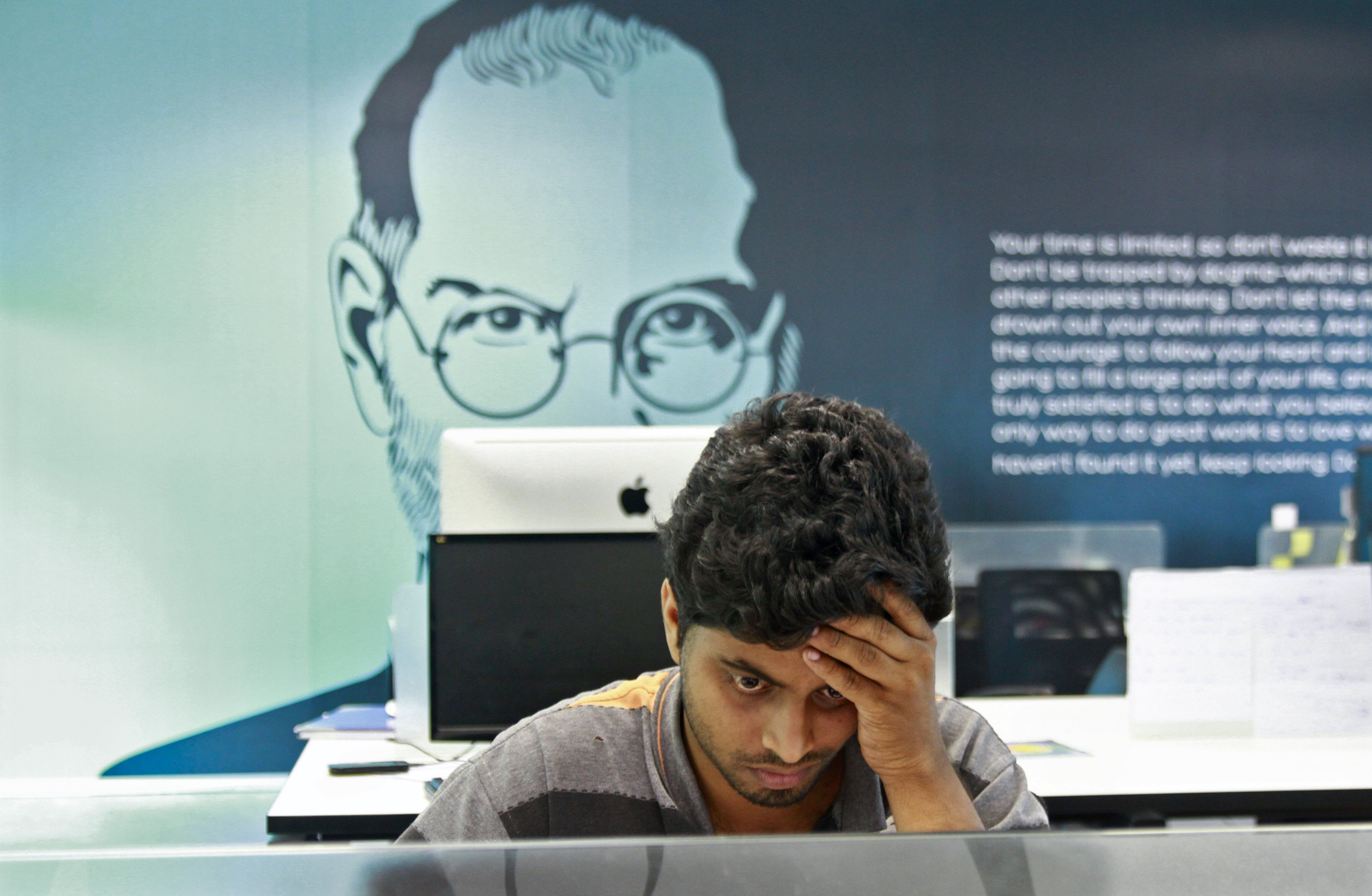
Wipro says AI has already freed capacity equivalent to 20,000 workers
The numbers are beginning to move beyond speculation.
Wipro's chief technology officer Sandhya Arun said this month that the
company's use of AI had freed capacity equivalent to around 20,000
employees.
Wipro said those workers had been redeployed rather than dismissed.
The distinction is important.
There has not yet been evidence of an immediate 20,000-person AI
redundancy programme.
But the productivity implication is difficult to ignore.
Work that previously consumed the capacity of 20,000 people no longer
requires the same amount of human labour.
Wipro employs about 243,000 people.
The company has trained more than 100,000 workers in advanced AI skills
as it shifts toward what it calls a human-AI operating model.
That may protect jobs today.
It also raises a harder question about tomorrow.
If the same amount of work can eventually be done with substantially
fewer people, where do all the redeployed people go?
Retraining does not automatically solve the arithmetic
Governments and companies routinely respond to technological disruption
with the same prescription:
retraining.
The prescription is sensible.
The International Labour Organization says AI is increasing demand for
digital literacy, higher-order cognitive skills, adaptability and
socioemotional capabilities.
New technical jobs are also emerging around developing and maintaining
AI systems.
But retraining cannot guarantee that the number of new jobs equals the
number of jobs made less necessary.
Suppose five workers once completed a particular digital workflow.
AI enables one worker to perform the same output.
Training all five workers to use AI does not necessarily recreate five
positions.
It may simply make one worker dramatically more productive.
The Indian outsourcing model is especially exposed
India's success in digital services was partly built on labour-cost
arbitrage.
A qualified worker in India could often perform the same digital task for
less than a comparable worker in Britain or the United States.
Western companies therefore had a straightforward incentive:
Why pay a worker in New York to do something that can be done in
Bengaluru for substantially less?
AI inserts another competitor into that calculation.
Why pay either worker for every hour if software can perform much of
the task almost instantly?
That is the structural threat facing labour-intensive outsourcing.
Indian technology shares are already reflecting the anxiety
India's Nifty IT index has fallen sharply during 2026 as investors have
reconsidered the economics of the country's software-services industry.
Reuters reported this week that the index remained around 21% lower for
the year despite a sharp rally after leading AI executives called for a
slower pace of development.
Analysts said one reason for the rebound was straightforward:
slower AI progress would give Indian technology companies more time to
adapt.
That is a revealing market reaction.
A technology designed to increase productivity is simultaneously being
treated as a threat to companies whose business model depends heavily on
selling human productivity.
The work may not literally return to America
There is an important distinction.
AI does not necessarily mean a call-centre job in India becomes a
call-centre job in Ohio.
A software-testing role in Hyderabad may not reappear as another
software-testing role in London.
The job may disappear from the labour market entirely.
What can move West is the economic value previously attached to that
labour.
Instead of paying thousands of workers, a company may increasingly pay
for:
- AI model access
- Cloud computing
- Data-centre capacity
- AI software
- Semiconductors
- Specialist infrastructure
Much of that infrastructure is controlled by companies headquartered in
the United States and other advanced economies.
The money follows the infrastructure
Consider how money currently moves through a traditional outsourcing
contract.
A US company pays an Indian IT services company.
The Indian company pays thousands of employees.
Those employees pay rent.
Buy food.
Purchase homes.
Pay taxes.
Send children to school.
Use local businesses.
Money entering through digital exports circulates through the Indian
economy.
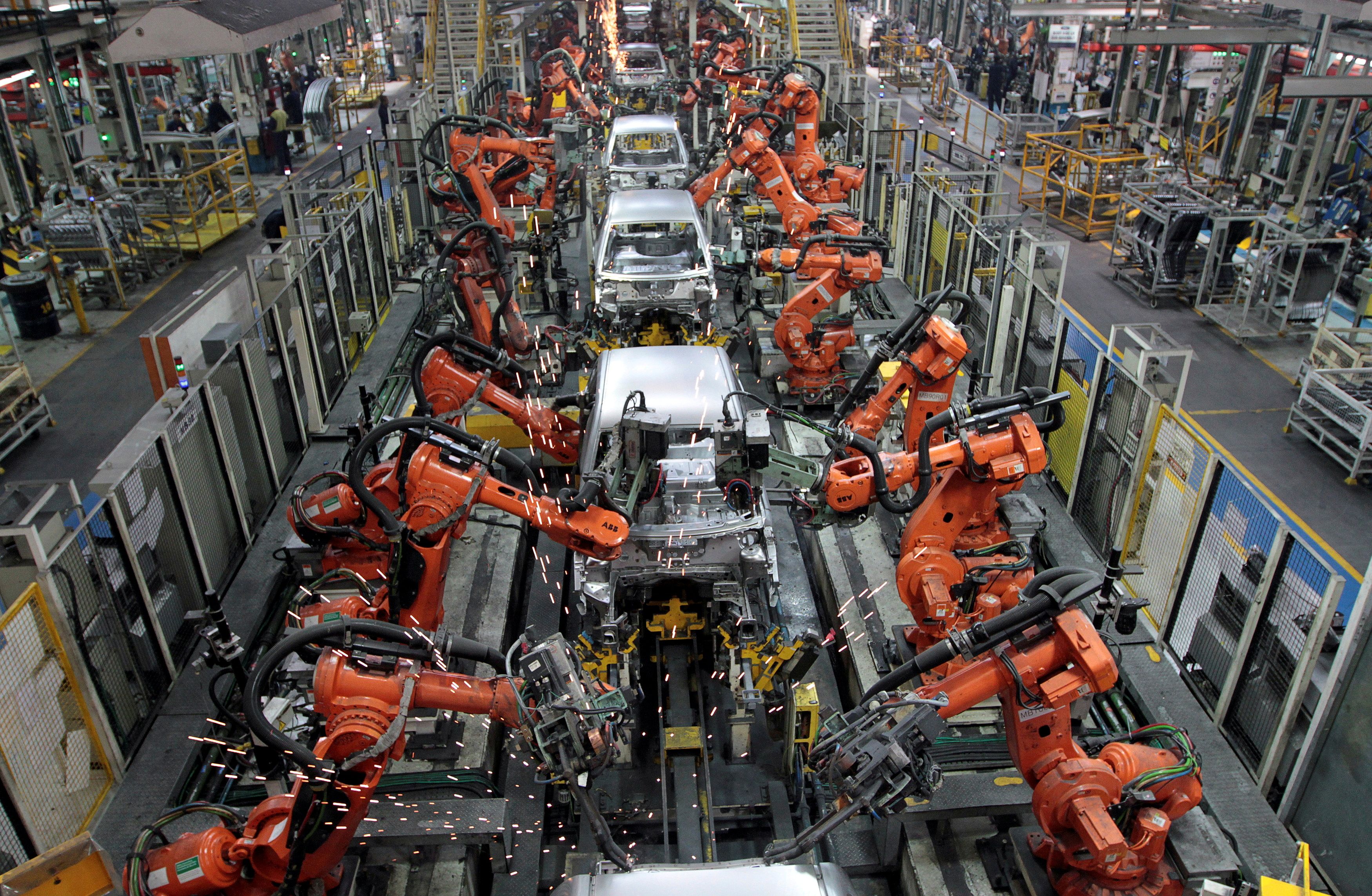
Now imagine that a large portion of the same output is automated.
The flow begins to look different.
Western company → AI provider → cloud provider → chip supplier →
shareholders and capital markets.
That is not how every AI transaction will work.
India itself is developing AI infrastructure and domestic models.
Indian IT companies are also building and selling AI services rather than
merely consuming American technology.
But the shift illustrates the strategic question governments now face:
Who owns the productive intelligence replacing the worker?
America has an enormous head start in the infrastructure beneath AI
The global AI economy is increasingly built on enormous amounts of
computing power.
Chips.
Electricity.
Data centres.
Cloud infrastructure.
Frontier models.
Investment capital.
Many of the most economically powerful companies in those layers are
American.
Amazon, Microsoft, Google, Meta, Nvidia and major AI laboratories sit at
important points in the stack.
AI infrastructure companies are also attracting extraordinary amounts of
capital.
British AI cloud company Nscale, for example, filed for a US listing this
month after reporting more than $100 billion in contracted revenue and
targeting a valuation of roughly $30 billion.
Its planned New York listing is another reminder that even infrastructure
companies headquartered outside the United States frequently turn to
American capital markets for scale.
This is not simply America versus India
Europe faces a similar dependency problem.
The International Monetary Fund warned European finance ministers this
month that AI could raise productivity while also increasing reliance on
foreign technologies.
The IMF identified the United States and China as the principal external
sources of that technological dependence.
Around 60% of workers in advanced European economies are employed in
occupations highly exposed to AI, according to the analysis.
Europe therefore faces a version of the same strategic problem:
productivity gains may arrive through technologies whose ownership and
economics largely sit elsewhere.
India faces the problem from the opposite direction
Europe's concern is partly that it may consume foreign AI.
India's additional concern is that foreign AI could erode one of its
most successful export models.
That makes the Indian case unusually important.
For decades, globalisation allowed countries with skilled but cheaper
labour to capture work from richer economies.
AI can weaken that comparative advantage because software does not need
to live where wages are lowest.
The computation can be performed wherever sufficient infrastructure is
available.
AI could globalise productivity while concentrating ownership
That is the uncomfortable possibility.
A business in Britain can use AI.
A hospital in Kenya can use AI.
A bank in India can use AI.
A retailer in Nigeria can use AI.
Productivity gains can spread globally.
But the profits generated by the infrastructure underneath those systems
need not be distributed globally in the same way.
AI may globalise productivity while concentrating ownership.
The problem is not simply unemployment
Policymakers often frame AI disruption as a question of jobs.
How many disappear?
How many are created?
Which workers need retraining?
Those questions matter.
But for an export economy, there is another question.
Where does the income go?
A digital-services worker represents more than one job.
Their salary becomes household consumption.
Their income supports other businesses.
Their taxes help finance government.
Their spending creates employment elsewhere.
Remove enough salaries and the impact moves through the wider economy.
The ILO says mass displacement has not happened yet
The evidence still requires caution.
A June review by the International Labour Organization found that
generative AI is producing measurable productivity gains, but large-scale
employment displacement remains limited so far.
Reported time savings have often been modest and have not consistently
translated into higher measured output, earnings or employment.
The ILO nevertheless identified risks around inequality, diminished
opportunities for younger workers and changing job quality.
That matters because economic transitions rarely occur everywhere at
once.
The absence of mass unemployment today does not establish what happens
when more capable systems are embedded across millions of workflows.
Entry-level jobs may be the first pressure point
The traditional outsourcing model has also functioned as a training
system.
Graduates enter junior roles.
They perform routine work.
They gain experience.
They become senior engineers, managers and consultants.
AI is particularly capable of assisting with many of the structured
tasks historically assigned to junior workers.
If companies hire fewer people at the bottom, they may eventually
discover they have fewer experienced people at the top.
This is why the employment problem cannot be measured only through
redundancies.
Fewer vacancies can reshape a labour market without anyone receiving a
dismissal letter.
India cannot solve this simply by becoming cheaper
Labour-cost competition works when the competitor is another worker.
It becomes much harder when the competitor is software.
A human salary can be reduced only so far.
Software can be replicated at extremely low marginal cost once the
underlying infrastructure has been built.
That means India's future advantage cannot depend only on being the
cheaper place to perform somebody else's digital work.
It increasingly has to own more of what produces the work.
The strategic answer is ownership
Governments around the world are beginning to describe AI as sovereign
infrastructure.
That language matters.
Countries once worried about dependence on foreign oil.
They now worry about dependence on foreign cloud computing,
semiconductors and foundation models.
India therefore faces a choice larger than retraining workers.
Does it become primarily a customer of AI?
Or an owner of it?
Domestic data centres matter.
Domestic models matter.
Semiconductor capability matters.
Energy infrastructure matters.
Intellectual property matters.
Indian companies capable of exporting AI services matter.
If intelligence becomes infrastructure, countries will care deeply
about who collects the rent.
Governments may also have to rethink taxation
Labour has historically been convenient to tax.
Workers receive salaries.
Employers pay payroll-related charges.
People spend income and pay consumption taxes.
Automation can alter that chain.
If fewer workers produce substantially more output, a larger share of
economic income may move toward corporate profits and capital owners.
Governments then face an uncomfortable fiscal question:
If machines replace taxable labour, where should governments tax the
value created by the machines?
There is no internationally settled answer.
Possible responses include corporate taxation, digital-services taxes,
consumption taxes, revised international profit-allocation rules and
different approaches to taxing capital income.
Then comes the demand problem
Automation contains an old economic contradiction.
Companies want to produce more with fewer workers.
But workers are also consumers.
If enough incomes disappear, who buys all the additional output?
The traditional cycle is straightforward:
People work → people earn → people spend → companies earn.
A heavily automated version can look different:
Machines produce → owners earn → labour receives a smaller share →
consumption weakens.
That is not inevitable.
Lower prices, new industries and new jobs can offset some of the effect.
But if labour's share of income falls substantially, governments may
eventually have to repair the missing purchasing power.
The solutions could become politically uncomfortable
Wage supplements.
Shorter working weeks.
Negative income taxes.
Universal basic income.
Public stakes in AI infrastructure.
Sovereign wealth funds.
Taxes on highly automated profits.
Governments are unlikely to choose the same answer.
But the underlying problem becomes harder to avoid if productivity grows
much faster than employment.
India also has something the AI companies need
The relationship is not entirely one-sided.
India has more than a billion people.
An enormous domestic market.
A vast engineering workforce.
Large amounts of business and linguistic data.
A sophisticated digital payments infrastructure.
Established technology companies.
And decades of experience delivering digital services at enormous scale.
Those assets could allow Indian companies to move upward from supplying
labour toward owning products, platforms and intelligence.
The transition is therefore not predetermined.
Indian IT companies are already trying to change the model
The industry understands the threat.
Wipro, TCS, Infosys and their peers are increasingly moving away from
simple billable-hour economics and toward outcome-based contracts,
consulting, AI deployment and higher-value engineering.
The objective is obvious.
If AI reduces the number of people needed to perform the work, Indian
firms need to capture some of the productivity value themselves rather
than merely accepting lower billable headcount.
Success would transform the industry.
Failure could shrink one of India's most successful export engines.
There is a reputation question hidden inside the economic one
For decades, India's digital workforce accumulated something beyond
technical skill.
It accumulated professional history.
Millions of workers gained experience maintaining banks, telecom
networks, software systems and global business processes.
As AI changes occupations, those workers may increasingly have to move
between roles, companies and industries.
Their ability to demonstrate what they have actually done may become more
valuable than the job title they previously held.
A CV tells the next employer where somebody worked.
A richer professional record can show what they delivered, what skills
they demonstrated, how their work was verified and how their reputation
survived the transition.
That is particularly important when entire job categories begin changing
underneath the people who occupy them.
The West may not get the jobs back
That is perhaps the most provocative part of the argument.
Workers in Britain and America should not automatically expect AI to
reverse decades of outsourcing.
The machine may compete with them too.
The likely divide is not necessarily:
Indian workers lose, Western workers win.
It may instead become:
Workers in many countries face pressure while the owners of AI
infrastructure capture a larger share of economic value.
That distinction matters enormously.
The geography of labour may matter less than the geography of ownership
Globalisation taught companies to ask:
Where can this work be done most cheaply?
AI may force countries to ask a different question:
Who owns the system capable of doing the work?
That question applies to India.
It applies to Britain.
It applies to Europe.
It applies to Africa.
It applies even inside the United States, where communities hosting huge
data centres are beginning to question the energy costs, subsidies and
local economic benefits associated with the AI infrastructure boom.
India trained the world’s digital workforce
That achievement will not suddenly disappear.
The skills, companies and institutions built over decades remain
enormously valuable.
But the next phase of the digital economy may reward a different asset.
Not simply labour.
Ownership.
Ownership of models.
Ownership of infrastructure.
Ownership of intellectual property.
Ownership of distribution.
Ownership of the capital through which the AI economy is financed.
India helped the West discover that digital work could be done anywhere.
AI may force India to confront the possibility that some of that work
no longer needs to be done by people anywhere.
If that happens, the decisive question will not simply be where the jobs
went.
It will be where the money went with them.
Editorial note: This article examines a possible
structural effect of AI on globally traded digital services. It does not
assume that AI will cause mass unemployment or that work currently
performed in India will literally be relocated to Western workers. Current
evidence suggests AI is so far changing tasks and productivity more
extensively than it is eliminating employment at scale. The argument
concerns where economic value may be captured if automation reduces the
labour required to deliver internationally traded digital services.