Trust Case Studies
A Rental Address Used for Fraud
The letters started the week I moved in. By month three, a debt collector was at my door and my own mortgage application had been declined.
By Logic19 November 2025 4 min read
Information. Reputation. Leverage.
Build, verify and carry a Reputation Record shaped by evidence, responses and resolution — not anonymous stars.
The letters started the week I moved in. By month three, a debt collector was at my door and my own mortgage application had been declined.
Pulse Stories are first-person stories written by RRSource. This is not one real person's account: names, places and details are invented, but the events reflect situations documented in public reporting.
The first letter was addressed to someone called "M. Oakes." I wrote not at this address on it and put it back in the post. I felt quite responsible about it.
The second week there were four. Then eleven. Different names — M. Oakes, Mark Oakley, M. Oak — different lenders, the same flat number. Payday loan companies. A phone contract. Two credit cards. A car finance firm I had never heard of. Red lettering started to appear on the envelopes. FINAL NOTICE. ACTION REQUIRED.
I phoned my letting agent, who told me the previous tenant had "left in a bit of a hurry" and that I should just return to sender. So I did. For three months, I returned to sender.
It was a Saturday morning, and I was in a towel.
The man at the door had a lanyard and a clipboard and the kind of calm that is designed to make you feel guilty. He said he was there to discuss an outstanding balance of several thousand on a loan secured to this address, and asked if Mr. Oakley was home.
I said I didn't know any Mr. Oakley. He looked past me into my hallway, at my shoes, my coat, my life, and said, "Then you won't mind if I note that goods at this address may be subject to recovery."
I shut the door and sat on the floor and shook.
I was a nurse working nights. I had saved for six years for a deposit on a flat of my own. Two weeks after the knock, my mortgage application was declined.
No one would tell me why at first. When I finally got my own credit report, there it was: my address — my address — linked to a web of applications, defaults and searches. The system couldn't tell me apart from a ghost. As far as the algorithms were concerned, whoever lived at Flat 4 was a bad risk, and I lived at Flat 4.
I spent my days off on hold. Each lender wanted a different form. One wanted a police reference number. One wanted proof I hadn't lived there on a date two years before I moved in, which is a sentence I still can't read without wanting to throw something. The letting agent "couldn't share data about previous occupants." The fraud had a name and a trail and a pattern, and every single institution involved was very sorry and completely uninterested.
I later learned that "Mark Oakley" had probably never lived there at all. The previous tenant had let a man redirect post "for a few weeks" in exchange for cash. My flat had been a mailbox for a fraud operation, and I had moved in to become its cleanup crew.
It took eight months. A police report. A formal notice of correction on my credit file. Letters to every lender, each with proof of my tenancy start date, my ID and the police reference. Some wrote back and removed the link. One kept sending letters for another year.
I got my mortgage in the end — a year late, at a worse rate, with a hole in my savings for the fees and the time off. Nobody paid for that. Nobody was ever charged.
People ask me if I'm over it. I still check the post with my heart in my throat. I still flinch at a knock on a Saturday. And I still think about how easy it was: a door, a letterbox, and a system that trusts an address more than it trusts a person.
The scale: Identity-based fraud is enormous. In the United States alone, the Federal Trade Commission received more than 1.1 million identity theft reports in 2024, and consumers reported losing more than $12.5 billion to fraud that year (FTC, March 2025). Using an address the fraudster does not live at — to receive cards, loans or goods — is a well-known technique worldwide.
If letters for strangers arrive at your address:
What would have helped: tenancy records connected to verified identities rather than addresses, so a person is not judged by who lived behind the same door. Read how to document a dispute and identity vs credit vs reputation.
Loading comments…

Dating apps were built to make strangers discoverable. AI, reverse-image search, facial recognition and persistent digital traces are making them discoverable in ways many users never intended. For women in particular, the problem is no longer simply whether a dating profile is private. It is whether a photograph, first name or fragment of biography can be connected to a workplace, social account or home life outside the app.

HGV employers can check licences, qualifications, penalty points, CPC training and tachograph compliance. Yet those checks still leave a harder question unanswered: what has this driver actually been like to work with over time? In a high-risk industry built on movement, the gap between legal eligibility and professional reputation may be wider than many employers realise.
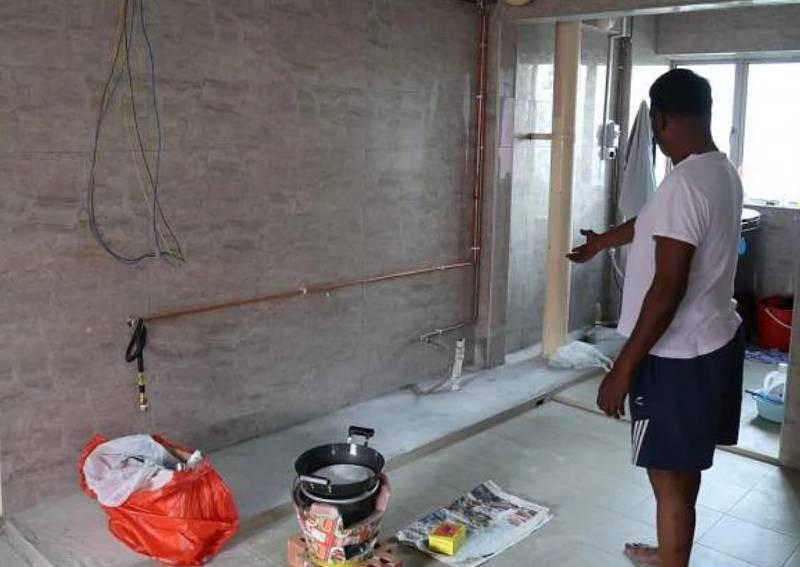
A homeowner pays a deposit, the contractor stops turning up and communication breaks down. This fictionalised example shows how the dispute was documented and resolved.